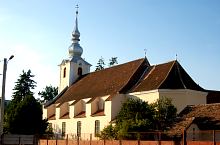
Map of Făgăraş: Făgăraş fortress
Around 1310 voivode Apor László built a wooden fortress here. Some historians say that the foundation of Făgăras fortress was laid by Pós as early as 1227-1233. After the Tartar raids Munetia voivodes in the process of populating Făgăras received such credites that in 1464 the king gave them the fortress as feud. After that, the fortress was tossed back and forth from the Transilvanian principality, to the royal court, heirs and voivodes, wifeves of suzerains and even the Turks. Only some of the owners left their permanent marks. In the XV century the stone and brick fortress already has 4 towers.
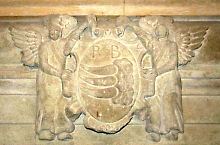
Between 1528 and 1541 Majláth István, later voivode of Transilvania, transformed the fortress into castle fortress. He built another interior yard and a gate tower. The coat of arms of his family can be seen to the right of the gate. Bethlen Gábor brings Italian architects and the Renaissance flower motifs, open balconies come onto the scene and the four bastions are built. During the time of Rákóczy György the outside walls were doubled and the area in between was filled up with land, thus the surrounding walls reached a thickness of 8m. The water ditch was further widened reaching a width of 50-70m and a depth of 6m. It was a real lake with water from the river Olt. A knockdown bridge led to the thick-set gate tower. The huge bastions and walls could support 50 cannons.
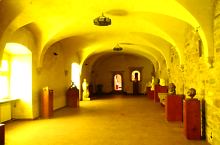
In the XVII century the fortress was transformed to please the regal demands. Apafi Mihály I, ruler of Transilvania lived here till 1690. The chapel was placed on the middle of the northern wall. The princely apartment is on the first floor of the southern wing of the castle, close to the large room.The carved door is ornamented with stone coats of arms and keystones. Today the fortress houses a historical museum, a folk art workshop, and a library. A part of the castle functions as tourist hostel.
Open hours:
1 June-30 September
8.00 -18.00, sâmbătă-duminică 8.00-16.00
1.octomber - 31 May
8.00-16.00
Contact
Tel : 0040-268-211-862
Guide: Romanian, English, French
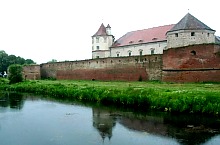
Făgăraș fortress, Photo: Szabó Tibor
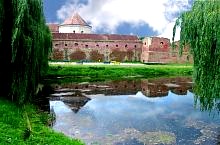
Făgăraș fortress, Photo: Mircea Vâlcu

Făgăraș fortress, Photo: Radu Matală
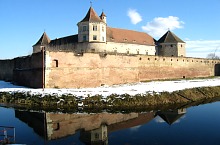
Făgăraș fortress
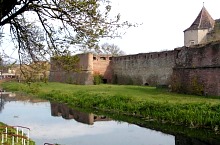
Făgăraș fortress, Photo: Szabó Tibor
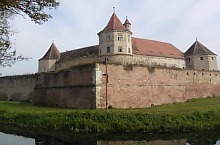
Făgăraș fortress, Photo: Szabó János
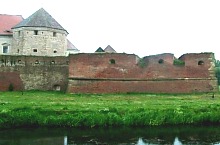
Făgăraș fortress, Photo: Szabó Tibor
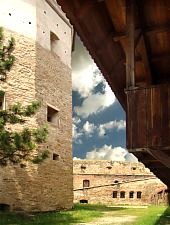
Făgăraș fortress, Photo: Mircea Vâlcu
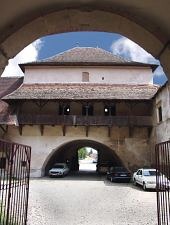
Făgăraș fortress, Photo: Mircea Vâlcu

Făgăraș fortress, Photo: Szabó János
Făgăraș fortress, Photo: Mircea Vâlcu

Făgăraș fortress, Photo: Mircea Vâlcu

Făgăraș fortress, Photo: Vajda József

Făgăraș fortress, Photo: Vajda József
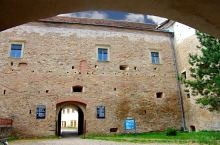
Făgăraș fortress, Photo: Mircea Vâlcu

Făgăraș fortress, Photo: Szabó János
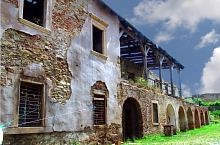
Făgăraș fortress, Photo: Mircea Vâlcu
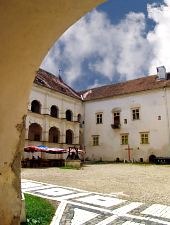
Făgăraș fortress, Photo: Mircea Vâlcu
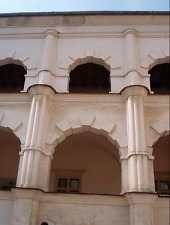
Făgăraș fortress, Photo: Muszka János
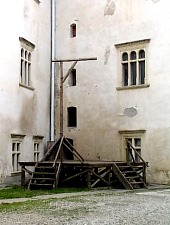
Făgăraș fortress, Photo: Szabó János

Făgăraș fortress, Photo: Mircea Vâlcu
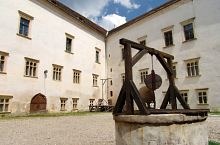
Făgăraș fortress, Photo: Mircea Vâlcu

Făgăraș fortress, Photo: Muszka János

Făgăraș fortress, Photo: Iulian Șchiopu

Făgăraș fortress, Photo: Iulian Șchiopu
Făgăraș fortress, Photo: Iulian Șchiopu

Făgăraș fortress, Photo: Iulian Șchiopu

Făgăraș fortress, Photo: Iulian Șchiopu

Făgăraș fortress, Photo: Iulian Șchiopu

Făgăraș fortress, Photo: Iulian Șchiopu
Făgăraș fortress, Photo: Iulian Șchiopu
Source: welcometoromania.ro
GPS: 45.84531N, 24.97378E
Map type